3 minutes
The federal government spends more than $700 billion annually on contracts, making it one of the largest and most complex procurement ecosystems in the world.
And yet, for all that scale, there’s still a persistent misconception about how procurement actually works.
Many assume decisions begin with an RFP. In reality, by the time an RFP is released, much of the outcome has already been shaped through conversations, exposure to new technologies, internal alignment, and early market engagement.
The process government contractors miss.
The federal procurement process is a continuous dialogue between government and industry.
Before requirements are formalized, agencies are:
- Exploring what’s technically possible
- Engaging with industry to understand solutions
- Gathering input from program managers, engineers, and mission teams
- Aligning internally around priorities and constraints
At the same time, companies are trying to:
- Understand where demand is going
- Position themselves around evolving mission needs
- Build relationships that will matter later in the cycle
This ecosystem relies on strong partnerships to bridge the gap.
How federal buying decisions actually get made.
Practitioners sit at the center of the contracting lifecycle. They’re not always the final signatories, but they are often the ones who:
- Define technical and mission requirements
- Evaluate and down-select solutions
- Shape what ultimately makes it into an RFP
- Translate mission needs into something industry can actually respond to
Reaching this audience requires a different approach. Practitioners aren’t engaging with content for awareness or brand-building. They’re looking for insight they can immediately apply to their work. What resonates most is:
- Clear examples of how others have solved similar mission challenges
- Practical guidance on implementation, tradeoffs, and constraints
- Honest discussion of what works (and what doesn’t)
- Early visibility into emerging approaches they can pressure-test internally
And that dynamic doesn’t stop with practitioners. Contracting officers (COs) and contracting specialists (CSs) are often viewed as blockers, but in reality, they’re partners in getting mission outcomes delivered. They help shape viable paths forward, ensure requirements are executable, and ultimately determine how programs move from concept to contract.
That role is especially critical in an environment where small business participation and set-aside requirements are a core part of acquisition strategy. Procurement teams are not just evaluating solutions – they are also determining how work is structured across primes, subcontractors, and small business partners.
For industry, that means success isn’t just about having the best solution. It’s about understanding:
- Where small business set-asides may apply
- How agencies are thinking about teaming and partner ecosystems
- What role your organization plays within a broader acquisition strategy
Engage early to close the gap.
The procurement environment is evolving quickly:
- Increased pressure on agencies to deliver faster with limited resources
- Growing competition, including non-traditional entrants
- Rapid shifts in priority areas like AI, cybersecurity, and data
- Continued efforts to modernize acquisition
In this environment, timing and proximity matter. Organizations that engage earlier have a fundamentally different opportunity – not because they are louder, but because they are more aligned with practitioner and mission priorities.
When done well, environments like this:
- Bring together agency stakeholders and industry in a working setting, not just a marketing one
- Create space for practical, mission-oriented conversations
- Help companies understand how priorities translate into real requirements
- Give agencies exposure to solutions in a more grounded context
These environments function less like traditional events and more like connection points within an ongoing process, or what could be thought of as “last-mile engagement” between strategy and execution.
That dynamic becomes even more pronounced in areas like small business set-asides, where partnership strategy and early engagement directly shape outcomes.
Where the conversations actually happen.
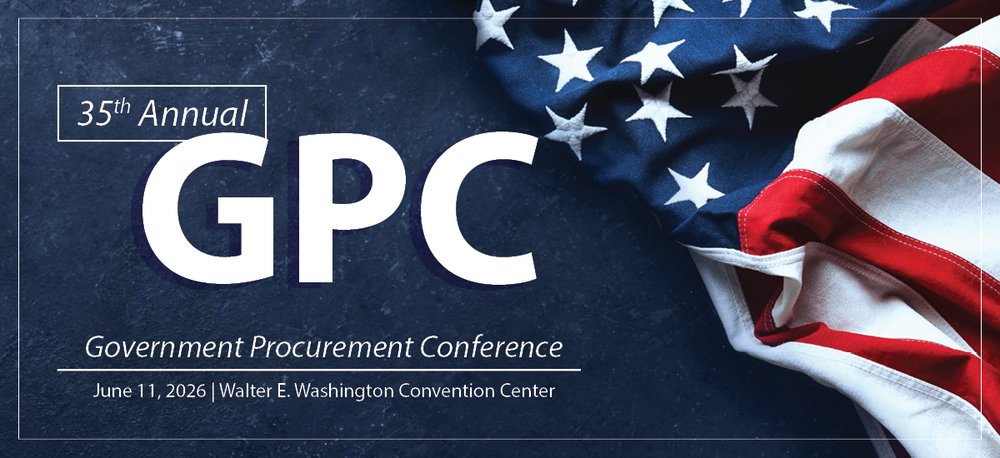
This is where environments like the Government Procurement Conference (GPC) play a role, but not in the way you might think.
Now in its 35th year, GPC is structured around active procurement engagement, not passive networking.
The value is not just the number of people in the room. It’s the structure, access, and intent behind the audience.
- Over 770 pre-scheduled matchmaking meetings connect agencies, primes, and small businesses in targeted, one-on-one conversations aligned to NAICS codes and procurement needs
- 56%+ of attendees are SAM-verified, meaning they are actively eligible and participating in federal contracting
- A strong mix of contracting specialists, small business liaisons (OSDBU), and program stakeholders, reflecting the roles responsible for both acquisition strategy and small business engagement
- 81% of industry attendees qualify as small or diverse businesses (SB, WOB, MOB, 8(a)), reinforcing the event’s role in supporting set-aside and supplier diversity requirements
Participating organizations include agencies such as the General Services Administration, NASA, and Marine Corps Systems Command, alongside industry leaders like Leidos and T-Mobile – reflecting the full ecosystem shaping federal acquisition.
GPC reflects that reality, bringing small businesses, primes, and agencies together to build the partnerships that drive set-aside strategies and future contract vehicles.
This event is where:
- Small businesses gain direct access to agency buyers and teaming partners
- Primes identify partners aligned to upcoming opportunities
- Agencies engage a qualified, procurement-ready vendor base
Procurement is not a moment. It’s a process.
The organizations that understand where and how that process actually unfolds are the ones best positioned to win. And environments like GPC surface and accelerate the procurement opportunities that are taking shape.
With the matchmaking deadline approaching (April 30), organizations that want to participate meaningfully need to be thinking about engagement now.
If your goal is to engage earlier in the procurement process, connect with the right stakeholders, and better understand how decisions are forming, the question isn’t whether to show up – it’s how.